
RRTS Tree Felling Plan: What It Means for Buyers and Investors in Gurugram-Faridabad
Hindustan Times reported that the proposed Gurugram-Greater Noida RRTS link needs 10,504 trees removed, with a much larger replanting plan alongside. It shows the project's paperwork is advancing, but it is still a plan and not a funded, running service.

By Mridul Shakya · Edited by Rakesh Mahajan · Source: Hindustan Times
Published
Figures checked against the source report and our project research · Editorial standards
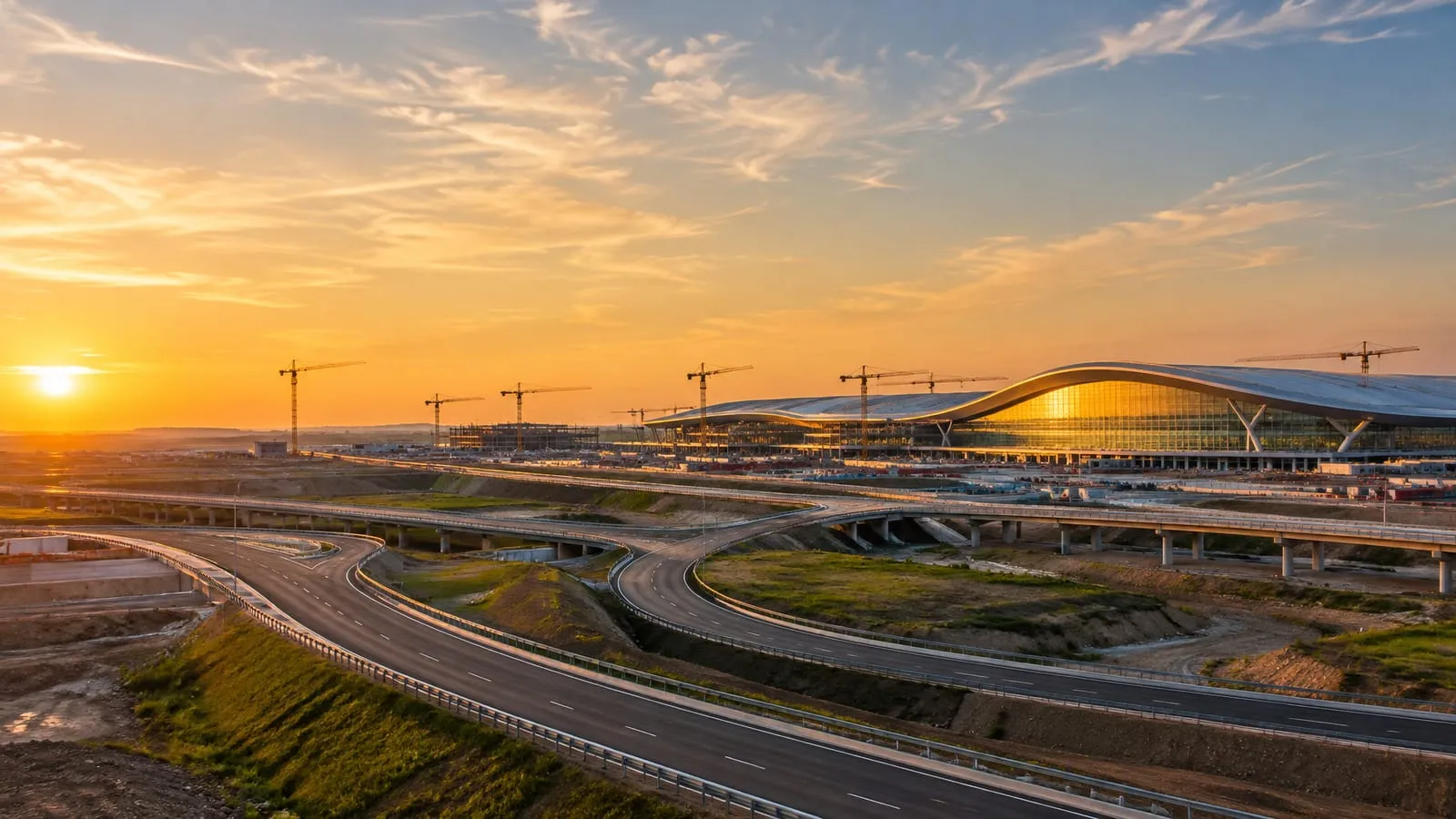 Illustrative
 What happened?
Hindustan Times reported, citing the project's detailed project report and an environmental and social impact assessment from March 2026, that the proposed Namo Bharat RRTS line between Gurugram and Greater Noida would need 109.04 hectares of land and the removal of 10,504 trees. Of that land, 77 hectares would be held permanently and 32 hectares used only during construction.
According to the same report, 9,178 of those trees stand along the main route, stations and depot, while 1,326 fall in areas set aside for station entry points and multimodal facilities. More than 3,400 are around the proposed depot on Gurugram-Faridabad Road. Stretches near Millennium City Centre, Wazirabad, Sector 57 and Gwal Pahari are also affected. NCRTC, the agency building the line, has suggested replanting over a lakh trees and the assessment budgets ₹68 crore for environmental measures.
Hindustan Times added that the route was discussed at a Gurugram Metropolitan Development Authority meeting, where departments were asked to share details of utilities and land that fall on the proposed path. The line is described as 63 km in length, split between a Haryana section of 50 km and a Uttar Pradesh section of 13 km, with seven stations, including IFFCO Chowk, Sector 61, Gwal Pahari, Sainik Colony, Bata Chowk, the Sector 87-88 intersection, Sector 142 and Surajpur.
Which sectors are affected?
- Gurugram-Faridabad-Greater Noida RRTS corridor
- IFFCO Chowk
- Sector 61, Gurugram
- Gwal Pahari
- Sainik Colony, Faridabad
- Bata Chowk, Faridabad
- Sector 87-88, Faridabad
- Sector 142, Greater Noida
- Surajpur, Greater Noida
Distance from the projects
Distances as sourced on our research pages.
| Project | To | Distance |
|---|---|---|
| DLF Downtown | Rapid Metro station | 0.5 km |
| Three Sixty North | Nearest metro station (not named by Oberoi Realty) | 1 km |
| DLF Cyber City | DLF Skywalks (intermodal connectivity) | 1 km |
| DLF The Dahlias | Sector 42-43 Rapid Metro | 1.2 km |
| Signature Global Titanium SPR | Proposed SPR metro | 1.5 km |
| Godrej Vrikshya | Proposed corridor metro | 2 km |
Potential impact
Tree surveys, land counts and utility mapping are the kind of groundwork that comes before approvals and construction, so this is a sign of movement. It is not a sign that trains are close. Environmental clearances, final alignment, funding and years of building remain. Any effect on prices near the proposed stations is likely to be gradual and uneven, and for now it mostly shapes expectations.
Gurgaon's average of ₹16,500 per sq ft already reflects a lot of existing metro and road access, so a new rail link may matter most for pockets that currently lack fast public transport. The felling and replanting will also draw scrutiny from residents and green groups, which could affect timelines. Buyers should treat the corridor as a long-term possibility, not a near-term price trigger.
Last updated:
Source
-
Hindustan Times · 17 Oct 2026, 7:40 am IST
“Over 10,000 trees need to be felled for Gurugram-Faridabad-Greater Noida RRTS project”
https://www.hindustantimes.com/cities/gurugram-news/over-10-000-trees-need-to-be-felled-for-gurugram-faridabad-greater-noida-rrts-project-101792176394366.html