
Why Mumbai is a liquidity market
Most Indian cities ask you to bet on a corridor maturing. Mumbai mostly asks you to pay up for something that is already there. The island city and the western suburbs are hemmed in by the sea, so there is no endless edge to expand into, and demand from finance, trade and media has been concentrated here for generations. The result is a market where buyers and sellers are always present, even in weak years.
That liquidity has a price. At the city average, ₹1 crore buys about 313 sq ft, less than a third of what it buys in Pune or Hyderabad. You are paying for exit certainty and for the address itself. If you need a large home on a moderate budget, Mumbai is the wrong city to force it into.
Why Mumbai’s growth number looks modest
Sixty-two percent in five years sounds slow next to Gurgaon’s 118%. The comparison is misleading. Mumbai started from a price level that most cities have still not reached, and a 10% compound rate on ₹32,000 per sq ft adds more rupees per sq ft each year than a 17% rate on ₹16,500. What Mumbai rarely does is the sudden re-rating that a new corridor gets when an expressway opens. Its appreciation is incremental, steady and, crucially, far less dependent on any single project being finished.
Worli: the price history of Mumbai’s trophy address
Worli is the one Mumbai micro-market our desk tracks year by year. It is the city’s ultra-luxury epicentre, and its curve shows what the top of a mature market looks like.
| Year | Worli avg ₹/sq ft | Year-on-year |
|---|---|---|
| 2020 | ₹52,000 | — |
| 2021 | ₹55,000 | +5.8% |
| 2022 | ₹60,000 | +9.1% |
| 2023 | ₹66,000 | +10.0% |
| 2024 | ₹71,000 | +7.6% |
| 2025 | ₹75,000 | +5.6% |
No year above 10%, no year below 5%. Worli now trades at about 2.3 times the Mumbai average. The Bandra–Worli Sea Link, the Coastal Road and Metro Line 3 all touch it, and our data lists the Coastal Road’s full completion and a Worli–Sewri connector as still to come. Those are refinements to an address that already works, not the foundation of its value.
Rental yield in Mumbai: the 2.6% problem
Yield is annual rent as a share of the price you pay. At Mumbai’s 2.6% gross, a ₹1 crore flat earns roughly ₹21,700 a month, and rent alone would take close to 38 years to repay the price. That is the lowest yield of any Indian city on our list. Worli is thinner still, at about 2.2%.
- If you buy with a loan, assume you will be topping up the EMI from income for the whole holding period.
- Society charges in large towers eat into already small rents; Lodha World Towers, for example, carries high monthly outgoings on our research page.
- The better rent-to-price ratios in our Mumbai research come from integrated townships: Oberoi Elysian is estimated at about 3.0%, well above Worli.
Two researched Mumbai projects, side by side
| Lodha World Towers | Oberoi Elysian | |
|---|---|---|
| Location (per project address) | Upper Worli, Lower Parel | Oberoi Garden City, Goregaon East |
| Price per sq ft | about ₹75,000 | about ₹42,000 |
| Ticket size | ₹7.5–55 crore | ₹5.5–12 crore |
| Status | Ready | Possession Dec 2027 |
| Estimated gross yield | 2.4% | 3.0% |
| Our investment score | 72 / 100 | 82 / 100 |
| Our call | Buy | Strong Buy |
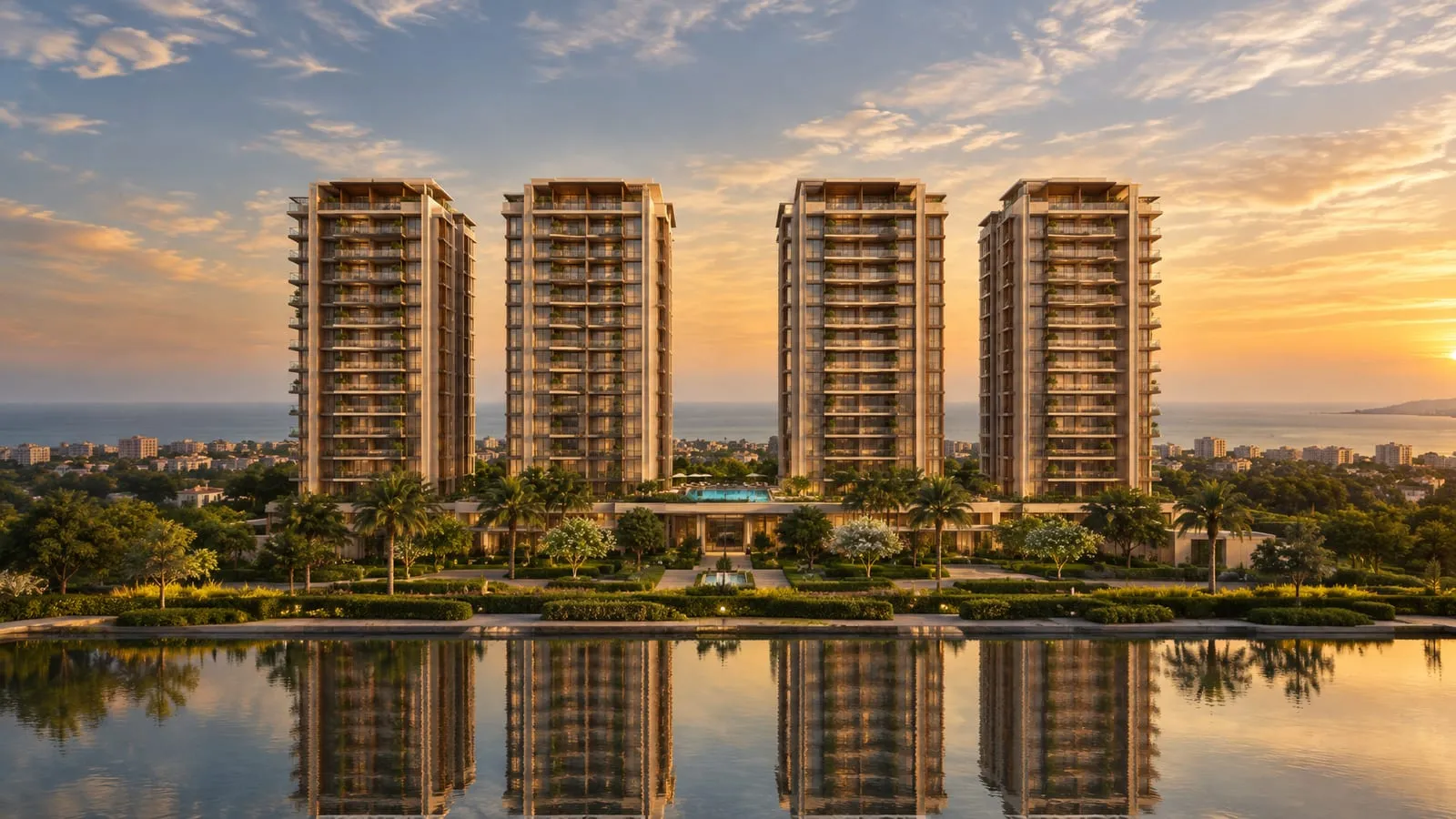
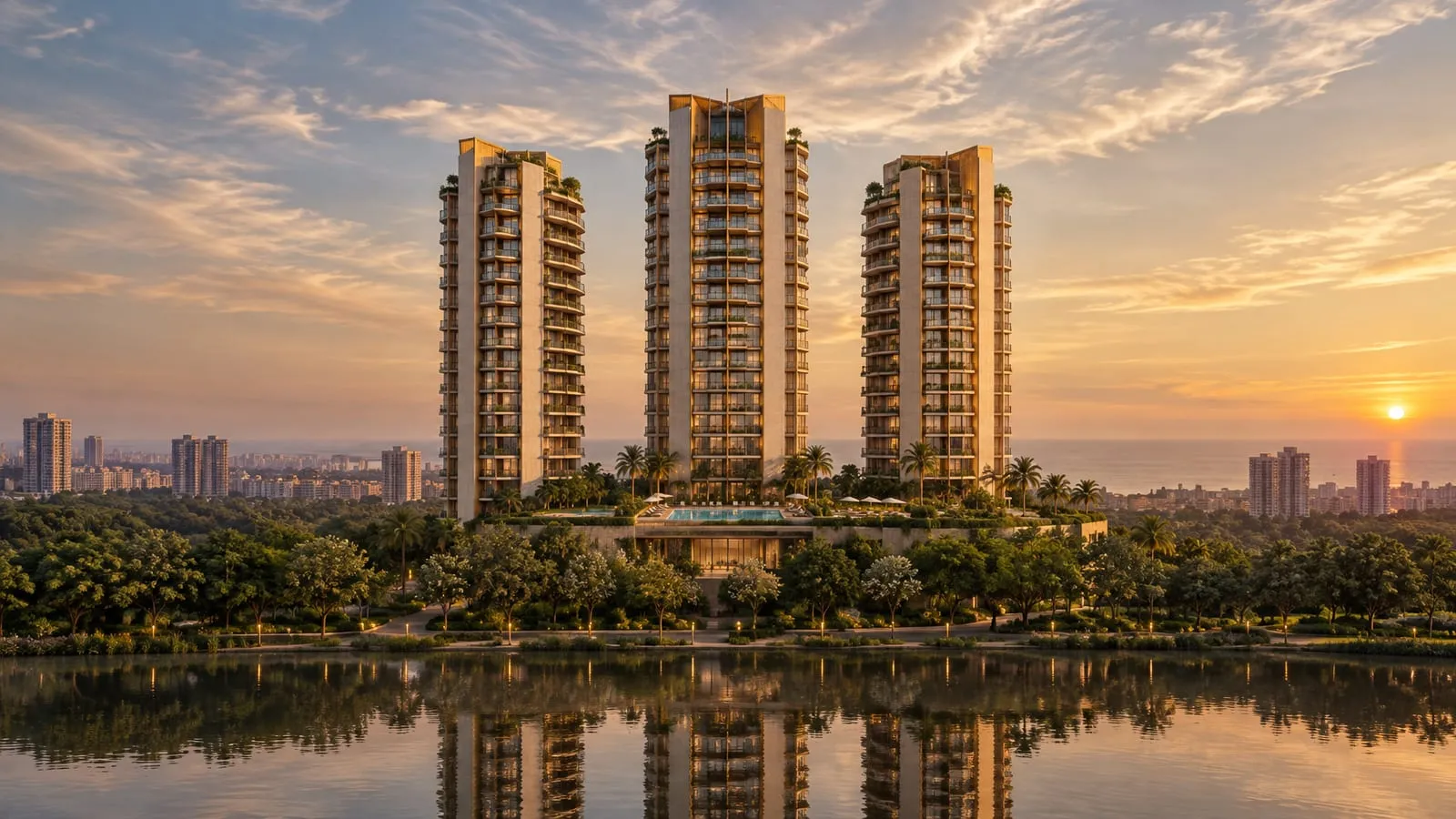
These two show the choice most Mumbai buyers face. Lodha World Towers is an address purchase: iconic, delivered, and with deep resale at Worli, but with thin yield and wide bid-ask spreads on premium floors. Oberoi Elysian is a daily-life purchase: school, mall, offices and hotel inside the gate, from a developer we score 86% on on-time delivery. We rate it higher because more of its value comes from how people actually live there.
Choosing a developer in Mumbai
Mumbai’s developer bench is the deepest in the country, and the gap between the best and the worst is stark. Our tracker follows 27 Mumbai projects from Lodha, Oberoi Realty, Godrej Properties and Piramal Realty alone, and our profiles rate dozens more.
- Strongest records on our profiles: Oberoi Realty (86% on-time), Godrej Properties (82%) and K Raheja Corp (80%), with L&T Realty (82%) among the safest under-construction names nationally.
- Solid but slower: Lodha (78%), Rustomjee (78%) and Piramal Realty (70%), where we prefer towers that are already well advanced.
- Redevelopment specialists such as Arkade Developers (80%) and Chandak Group are sensible picks, but always verify society consent before you pay.
- Names we would not back with new money: Omkar Realtors, RNA Corp and DB Realty, all rated 2.5 or lower out of five for delays and legal disputes.
Who should buy in Mumbai, and who shouldn’t
Mumbai makes sense for people who will live in the home for a long time, for families anchoring wealth in a single hard asset they can always sell, and for global Indians who want an address that needs no explanation. It makes much less sense for a first-time investor chasing yield, or for anyone who needs the flat to pay for itself. Those buyers should look at Bengaluru, Pune or Hyderabad on our data.
What would change our Mumbai view
- Transport lines reaching new suburbs on time, which would widen the set of affordable, commutable micro-markets and could pull growth away from the island city.
- A sustained fall in Worli’s annual gains below 5%, which would suggest the ultra-luxury tier is running into affordability limits.
- More stalled redevelopment projects surfacing, which would make us stricter on society-led purchases.