Builder Reviews
How to Vet a Builder Before You Buy: The 7-Layer Framework
The builder decides your outcome more than the location does. Our desk's 7-layer vetting framework — delivery record, financials, litigation, escrow behaviour — with a scoring table.
By the PropertyNivesh Research Desk · Edited by Rakesh Mahajan · · 10 min read
Why the builder outranks the location
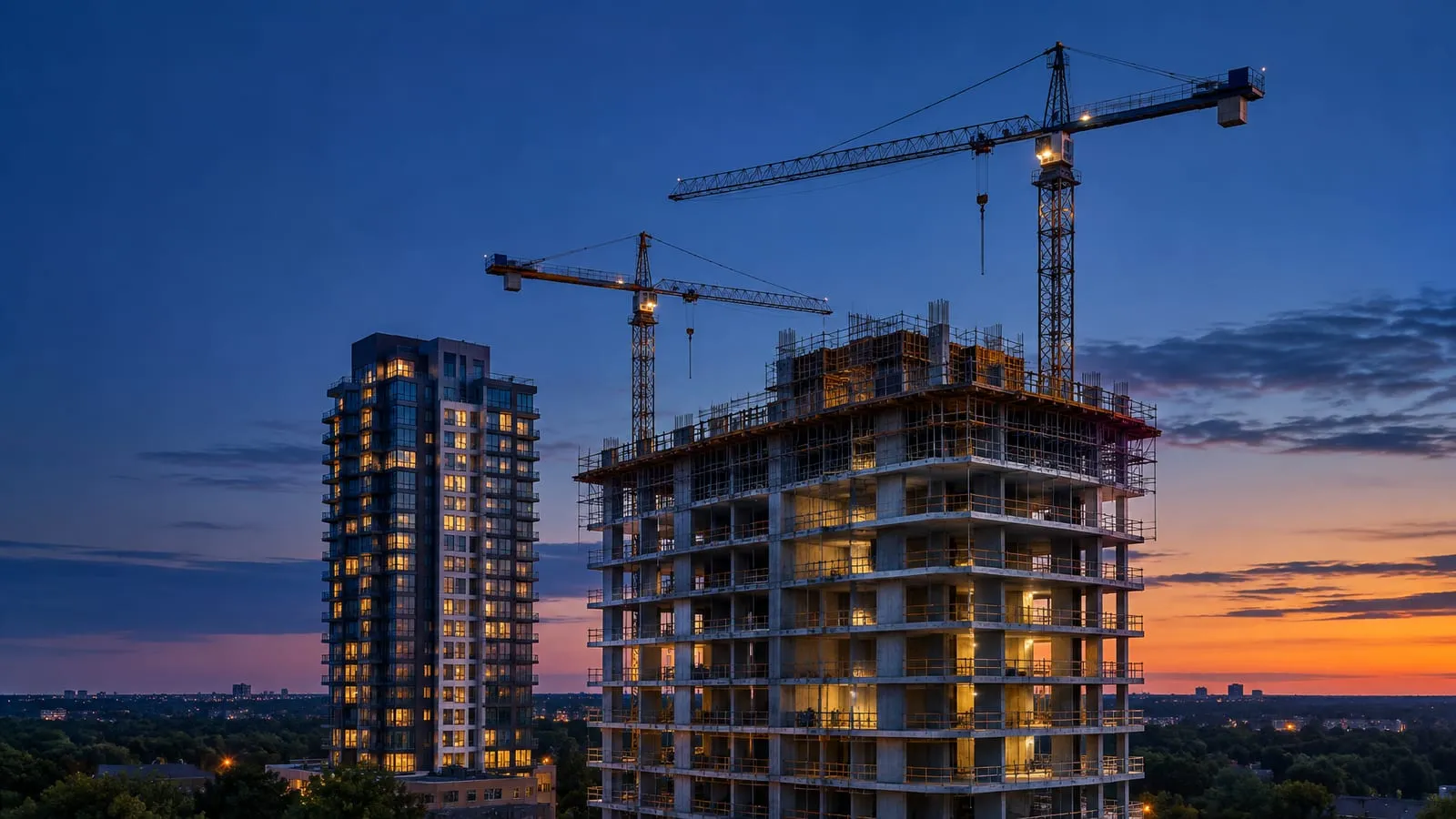
Two projects on the same road, launched the same year, at the same price: a decade later one has delivered, appreciated and trades liquidly; the other is a court case. Nothing about the location differed — the builder did. Strong builders tend to hold resale value better than commodity supply on the same corridor, and the catastrophic outcomes — stalls, insolvency, decade-long delays — concentrate among weak, over-leveraged developers. Vetting the builder is not a step in diligence; it is most of diligence.
Layer 1–2: Delivery record and timeline honesty
- Count completed projects and delivered square feet — marketing pages inflate; RERA and annual reports don't
- Compute on-time delivery: what share of towers reached OC within 6 months of the RERA-declared date?
- Check the last 5 years specifically — many 90s-era names coasted on old reputations into 2010s failures
- Visit one delivered project unannounced: lobby upkeep, lift function and resident chatter tell you more than any brochure
- Ask delivered-project residents one question: 'Would you buy from them again?' — the answer distribution is remarkably predictive
Layer 3–4: Financial strength and funding structure
Projects stall when money runs out, not when concrete does. What to examine:
| Signal | Where to find it | Healthy | Warning |
|---|---|---|---|
| Listed-company leverage | Exchange filings | Net debt falling; < 1x equity | Rising debt + falling pre-sales |
| Private-builder opacity | MCA filings, credit ratings | Rated paper, audited accounts | No rating, SPV shell structures |
| Project lender | RERA bank details | Marquee bank/HFC project loan | NBFC last-resort funding at high rates |
| Escrow discipline | RERA + demand letters | Collections routed to the RERA escrow | Collection account ≠ escrow account |
| Pre-sales dependence | Launch pattern | Construction funded regardless of sales | New launches funding old projects (Ponzi pattern) |
The last row is the one that kills buyers: builders who fund Project A's construction with Project B's bookings collapse in dominoes when sales slow. Serial launching with slow delivery is the visible symptom.
Layer 5: Litigation — read it like an underwriter
- Search the promoter name (not just the project) on the state RERA complaint portal, NCLT cause lists and consumer forums
- Distinguish noise from signal: land-dispute suits between businessmen are normal; patterns of buyer-refund orders are not
- Insolvency petitions against ANY group SPV matter — creditors pierce group structures faster than buyers can (see the ATS group's SPV-level admissions)
- Promoter-level criminal/ED proceedings deserve weight even when contested — governance overhangs suppress resale even if projects deliver (M3M's quashed arrests still cost buyers two years of price stagnation)
Layer 6–7: Construction quality and after-sales culture
- Quality proxies: backward integration (Sobha, Aparna manufacture their own materials), third-party audits, structural warranty terms
- Visit a 5–10 year old delivery: facade weathering, seepage marks in basements and top floors, lift downtime logs
- After-sales: how were snag lists handled at their last possession? Society-transition disputes are a recurring tell
- Maintenance handover: builders who cling to maintenance contracts profitably often under-invest in the asset — ask delivered societies
Putting it together: the desk's scoring weights
| Layer | Weight | Kill-switch? |
|---|---|---|
| Delivery record & timeliness | 25% | Yes — <50% on-time is a walk-away |
| Financial strength & funding | 25% | Yes — undisclosed second mortgage = walk away |
| Litigation pattern | 15% | Yes — buyer-refund order pattern = walk away |
| Construction quality | 15% | No — priced, not disqualifying |
| Escrow/RERA discipline | 10% | Yes — missing QPRs 2 quarters = walk away |
| After-sales culture | 10% | No — priced |
Practical shortcut: our platform maintains independently researched profiles for 187 developers — ratings, litigation notes, verified FY26 financials for the majors, and explicit 'avoid' verdicts where deserved. Start there, then run layers 1 and 5 yourself for your specific project. Two hours of vetting is the highest-ROI work in the entire purchase — nothing you negotiate on price recovers what a failed builder takes.
The mistakes we see most often on the desk
- Vetting the brand, signing with the SPV — the marketing name has the reputation; the shell company has your money. Read whose name is on the agreement and what assets that entity actually holds
- Confusing scale with safety — a builder with forty simultaneous projects can be more fragile than one with four; what matters is funding per project, not logos per hoarding
- Treating awards as evidence — most real-estate awards are pay-to-play sponsorships; delivery records and RERA histories are evidence
- Assuming a bank's project approval equals diligence — lenders protect their loan with a mortgage over the land, not your booking; their approval tells you almost nothing about your risk
- Extrapolating one good delivery — a builder's best project is their showroom; the median project is your expected outcome. Ask about their worst delivery, then verify it
- Skipping the vetting because a relative or colleague already bought there — social proof built almost every stalled project's buyer base
- Letting a 5–10% discount override a red flag — discounts are the price of risk that weak builders pay knowingly; they know the trade better than you do
Quick answers to the questions buyers actually ask
- How long does proper vetting take? — About two hours using RERA portals and our developer pages; add one lawyer-hour for the agreement. It is the highest-ROI time in the entire purchase
- Is a listed builder always safer than a private one? — No, but disclosure makes listed builders' problems visible earlier. A conservatively-run private firm (Aparna, Experion) can outrank a leveraged listed one; the difference is you can verify the listed one quarterly
- What single number matters most? — On-time delivery percentage over the last five years. Everything else — brand, awards, design — is commentary on that number
- Does RERA make vetting unnecessary? — RERA gives you the x-ray; you still have to look at the image. Registration without reading the disclosures protects nobody
- Should I pay a premium for a top-quartile builder? — Almost always yes: our resale data shows 25–40% outperformance versus same-corridor commodity supply, which repays a 15–20% entry premium with margin
- What if the builder fails all checks but the location is perfect? — Walk away. Locations recur; recovered bookings from failed builders mostly don't. There is always another launch
If you want this framework applied to a specific builder and project you're considering, our advisory desk runs the full seven layers — including the SPV, escrow and litigation checks most buyers can't easily access — as part of the free first consultation.